
What I Noticed at Expo Mueble This Year
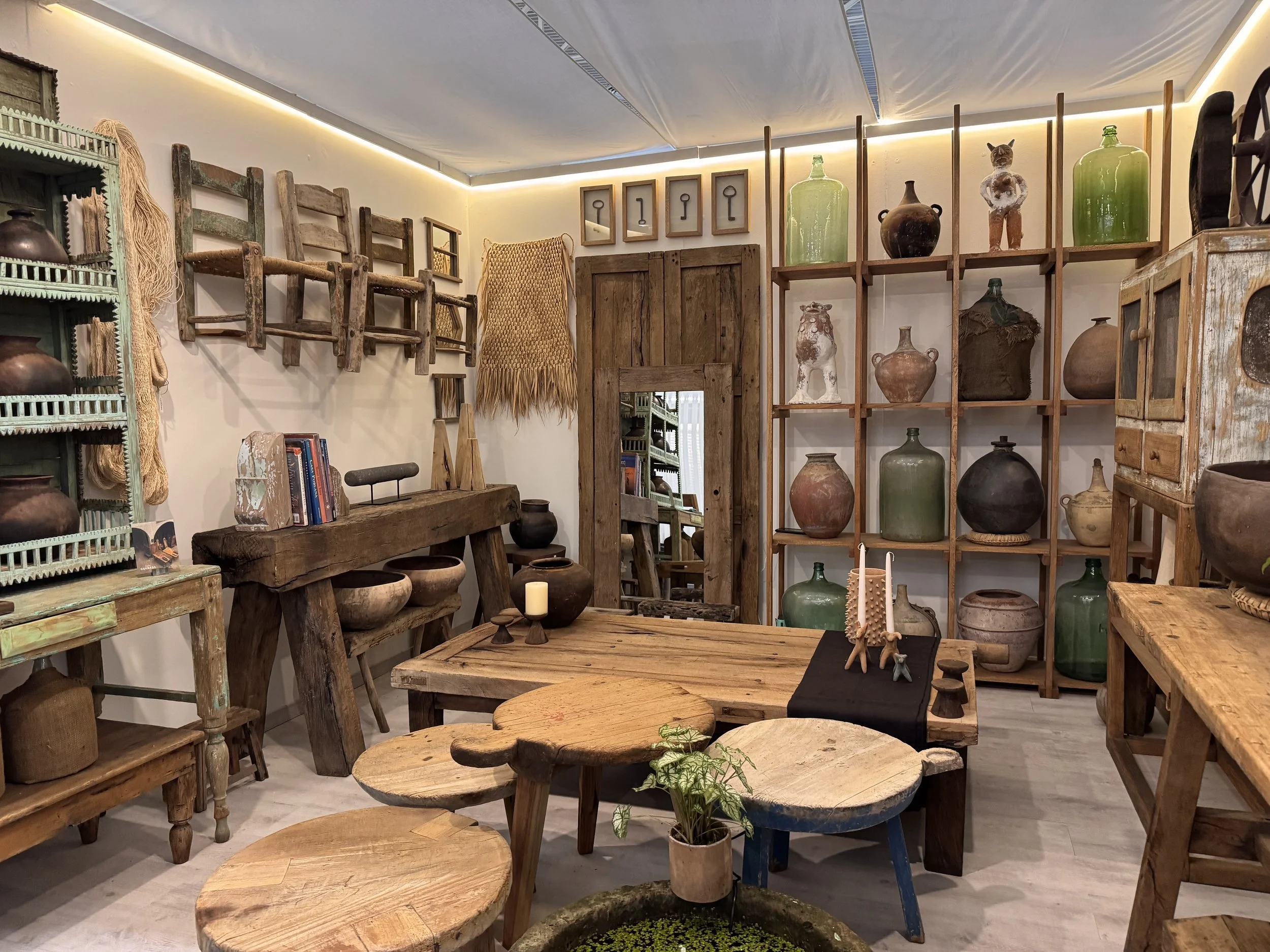
A vintage booth was a fun addition to the show this year.
I go to Expo Mueble looking for what’s new, obviously, but also for the bigger shifts happening in Mexican design and manufacturing. And this year, there were some pretty clear ones.
The quality is getting better. So are the prices.
There’s no question that the overall level of design, craftsmanship and finishing has improved. Pieces feel more sophisticated, more considered and, frankly, more competitive with what we see coming out of the U.S. and Europe. The days of assuming “made in Mexico” automatically means inexpensive are disappearing right along with it. Better quality costs more here too
Lighting is finally getting interesting.
This was probably my favorite development. For years, I’ve felt Mexico had fantastic furniture, textiles and artisan work but surprisingly limited lighting options. That is changing. We saw much more sculptural lighting, interesting materials, customization and pieces I would genuinely specify for projects. And while prices are climbing, there are still some very reasonable options compared with imported fixtures.
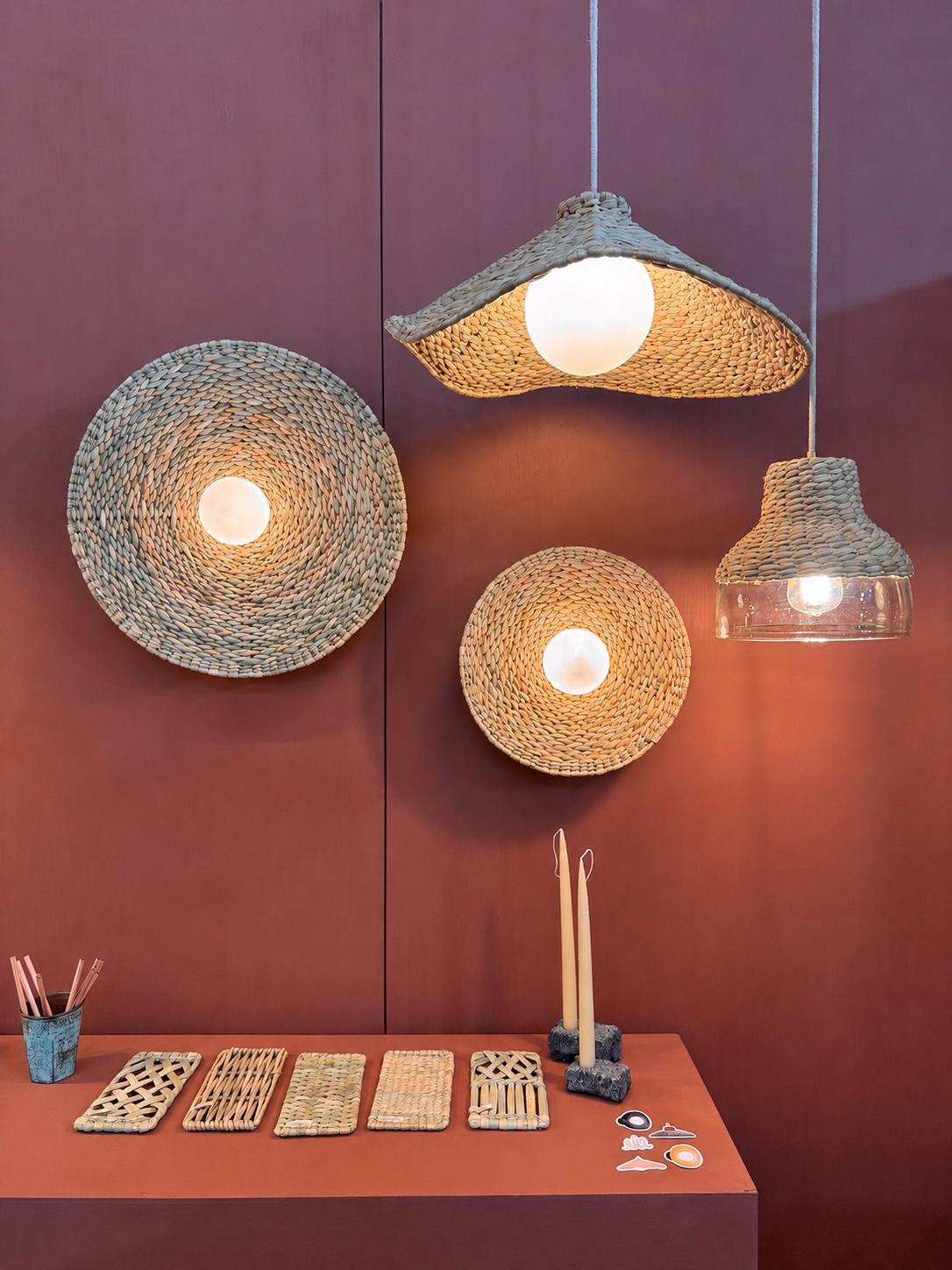
Great lighting made in Guadalajara.
Fabric is still a weak spot.
This was one of the more frustrating observations. There simply isn’t enough variety, which means you start seeing the same fabrics over and over again—on sofas, chairs, pillows and then three booths later, there they are again. Mexico needs more upholstery options, better performance fabrics and more interesting patterns and textures if the furniture industry is going to keep evolving.
What else is missing? Better art and better cushion construction.
There is incredible artistic talent in Mexico, but surprisingly little compelling art represented at a furniture show of this size. I’d love to see more original, contemporary Mexican work that designers can actually source.
I’d also happily start a small campaign for better foams and fills. Beautiful furniture loses some of its appeal when the seat cushion feels like it belongs in a waiting room. As the design improves, comfort and construction need to keep up.
Woven details and fringe are everywhere.
Rattan, cane, rope, woven fibers and fringe continue to have a major moment. Sometimes beautifully. Sometimes enthusiastically. Used well, they add exactly the texture and handmade quality that Mexico does so well.
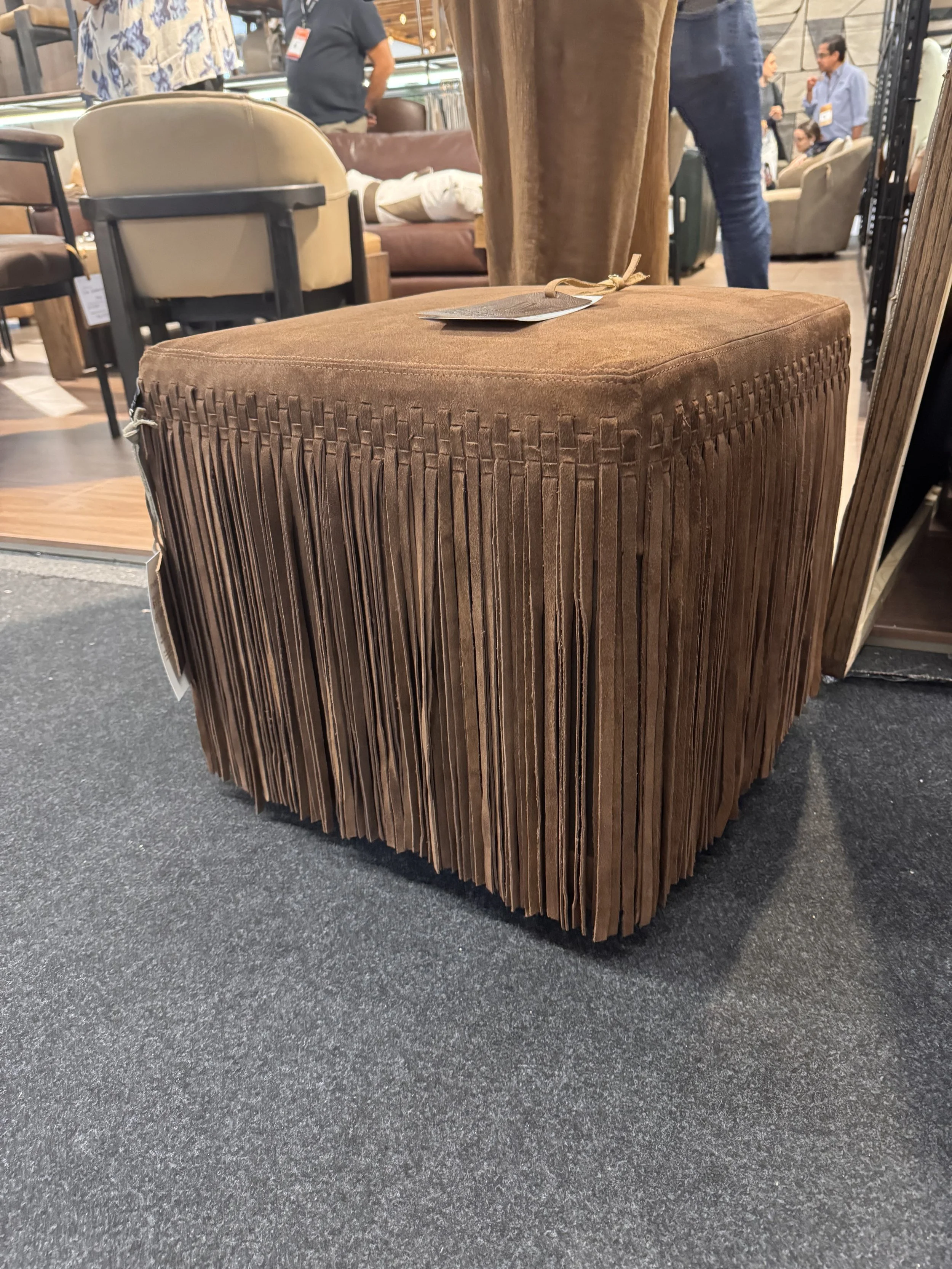
Loved this western inspired ottoman.
Floating backrests are having a moment too.
We saw a lot of sofas, benches and lounge seating with loose, movable or “floating” backrests rather than traditional fixed cushions. It creates a relaxed, flexible look and lets furniture function in more than one direction—particularly useful in open-plan spaces.
Decorative furniture finishes are getting much more interesting.
Another development I loved: more attention being paid to cabinet and furniture surfaces themselves. Textured woods, carved details, woven fronts, ribbing, specialty finishes and other decorative treatments are turning basic casegoods into something much more architectural.
My overall takeaway? Mexican design is getting noticeably better—and fast. There are still gaps in the market, but every year there are fewer of them.
Give it another five years and I think the conversation around “design in Mexico” is going to look very different.